Triceratops Eating Grass Redwork
A Natural Fit for Nature-Inspired Embroidery
As an experienced embroidery designer, I often look for designs that bring a sense of life and story to my projects. Triceratops Eating Grass Redwork immediately caught my eye with its charming and whimsical depiction of a prehistoric creature in a lush forest setting. The design feels like a scene from a children’s book, offering both visual appeal and storytelling potential.
The Visual Mood and Detail Level
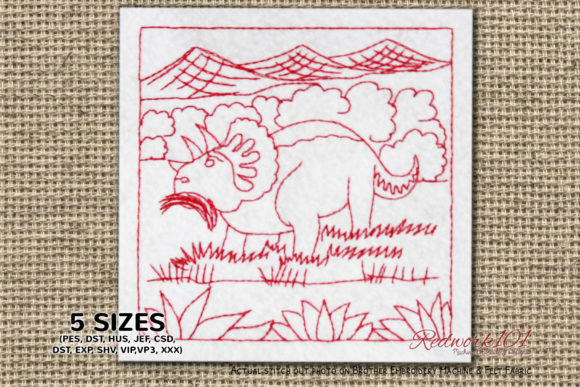
The Triceratops Eating Grass Redwork design captures a serene moment in nature. The Triceratops is depicted standing in a grassy field, munching on green grass while surrounded by flowers and soft foliage. The level of detail is impressive, with the texture of the grass and flowers rendered through subtle stitch work. The optional Box Stitch adds depth and dimension, making it easy to customize based on the project's needs.
What stands out is the balance between simplicity and intricacy. The design avoids overwhelming complexity, which makes it accessible for both beginners and seasoned embroiderers. The use of satin stitch and fill stitch brings out the natural shapes of the grass and flowers without being too dense or too sparse.
Fitting for a Wide Range of Products
Triceratops Eating Grass Redwork is versatile enough to be used across various types of handmade products. It works well on tote bags, sweatshirts, baby blankets, and even caps. The design’s size and layout make it suitable for both small hoop sizes and larger formats, depending on the project’s requirements.
For custom apparel, this design can add a playful and unique touch to t-shirts, hoodies, or aprons. Its gentle nature makes it ideal for nursery decor, such as pillow covers, wall hangings, or baby items. The embroidered patch version could also serve as a fun accessory for craft fairs or boutique merchandise.
When considering commercial embroidery, the design’s clarity and clean lines ensure it looks great on a variety of fabric types, including stretchy and textured fabrics. It also holds up well under frequent washing, which is essential for products like kitchen towels or reusable tote bags.
Design Considerations for Different Fabric Types
Working with dark fabric may require careful selection of thread colors to ensure visibility. Light-colored threads might not stand out enough, so it’s important to test the design on scrap fabric first. Similarly, stitch density should be adjusted based on the fabric type—denser stitches may be needed for thicker materials, while lighter stitches work better on delicate fabrics.
For curved surfaces like caps or hats, the design’s layout allows for seamless application. However, it’s always a good idea to review the printable mockup provided by Creative Fabrica to ensure the design fits the intended product shape and scale.
Impact on Product Value and Brand Consistency
Using Triceratops Eating Grass Redwork can significantly enhance the visual appeal of your handmade product. Its whimsical charm and attention to detail contribute to a sense of quality and care, which can boost buyer trust and satisfaction. This is especially important when selling on platforms like Etsy or creating custom orders for clients.
The design also supports brand consistency, particularly for businesses focused on nature-themed or educational products. It offers a consistent aesthetic that aligns well with other similar designs, helping to build a cohesive brand identity.
Giftability and Customer Engagement
This design has strong personalized gift potential. Whether it’s a toddler’s blanket, a personalized cap, or a handmade kitchen towel, Triceratops Eating Grass Redwork adds a unique and thoughtful element to the product. Customers are likely to appreciate the creativity and effort put into each piece, leading to increased customer engagement and repeat purchases.
From a marketing perspective, the design’s visual appeal makes it ideal for product photography. It lends itself well to both close-up shots and lifestyle images, helping to showcase the finished product in a way that appeals to a wide audience.
Embroidery Notes for Success
To ensure the best results, I recommend following these practical tips:
- Test on scrap fabric before using the design on your final project.
- Check thread color contrast to ensure visibility on the chosen fabric.
- Review stitch density to match the fabric type and desired effect.
- Confirm hoop size to avoid distortion or stretching of the design.
- Compare light and dark fabric mockups to see how the design appears in different settings.
- Use proper stabilizer to prevent puckering and maintain design integrity.
- Inspect small details after stitching to catch any issues early.
- Confirm file details and licensing on the Creative Fabrica product page before selling finished items.
Final Thoughts
Triceratops Eating Grass Redwork is a well-crafted design that offers both artistic value and practicality. Whether you’re working on a digital embroidery file for a client or creating a custom apparel line, this design provides a reliable and visually appealing option. Its versatility, attention to detail, and adaptability make it a valuable asset for any embroidery designer looking to expand their creative offerings.